|
History Of Carnival
When we speak of Brazil carnival as it is today, it is hard to imagine that it is rooted in European influence back in 1845 and that it came to Brazil as celebrations before the beginning of the forty day 'Lent' period of fasting and prayer.
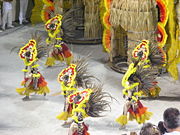
Brasil Carnaval Parade
There are numerous theories on the origins of carnival, which is celebrated around the world in many different ways. Every year, approximately four days before Ash Wednesday brasil carnavals erupt into sizzling high Summer celebrations in Brazil.
One theory on the history of Carnivale in Brazil, is that the bourgeoisie of Rio de Janeiro introduced the practice of holding masquerade parties and balls from Paris, mimicking the European form of the festival, Lent.
During the 46 days of Lent, which is a fasting period, it is traditional that many foods such as meats are strictly forbidden; nor can there be any parties or merry making. This religious period, for both Catholics and Christian orthodox, serve as a reminder of the "Passion of Jesus" and is seen as a time to repent of his suffering.
The word carnival is thought to come from the Italian Carne Vale or Carnvale, - which in Italian means goodbye to flesh or farewell to meat, which is not consumed during the period of Lent. However, it is believed that in preparation for Lent, the four days leading up to Ash Wednesday becomes a feasting period, with dancing and partying before the more peaceful and calmer season between Ash Wednesday and Easter. Hence, prior to the 46 days of Lent, Carnivale is seen as an opportunity to hold a large celebration before the fasting season.
The significance and history of carnival in Rio
The Capital city of Rio de Janeiro is therefore significant in the history of carnival. It is noted that the date of the first form of carnaval activity in Rio de Janeiro was in 1723. Immigrants from the Portuguese Island of Acores, Maderia and Cabo Verde, introduced the prank of entrudo, where water, flour and corn starch etc., was thrown at each other. This is still in existence today and is widely practiced during brasil carnaval, with some new additions being added over the years, such as the water-filled baloons - you've been warned!
Of great significance is the introduction of the European-styled formal balls and masquerade parties in Rio de Janeiro, during the early nineteenth century. These highly regarded social events evolved into ever more glamorous society carnival balls, held on Saturday night of carnival and increased in popularity in Rio up until the 1950's.
From the 1950's to 1960's, brasil carnaval balls and partying evolved further, into the now full blown extravaganza that it resembles today. Although its foundation of carnival balls are still popular, these now take on many varied forms, ranging from the Gay Gala Ball, attended by transvestites, homosexuals, hetrosexuals and drag queens wearing an array of costumes. Copacabana Palace Hotel host the most prestigious ball - the Gala Ball, with the line-up of guests being government officials, celebrities etc.,
There were further significant developments in the history of carnival, which over time, acquired elements derived from Native American and African cultures, (which are more predominant in carnavals in Brazil northeast today). One such element being the Samba, which is from the West African heritage of Brasil and was to become an intrinsic part of modern day carnival in Brazil.
The next dramatic chapter in the history of Brazil carnival occurred during the very liberating 1960's, which shaped carnivals in Brazil into what it is today. It is estimated that in excess of a quarter of a million tourists visit for carnaval brasil each year. It is little wonder, when you consider that the Brazilian carnival is known worldwide and attract carnaval lovers of every age, gender and religion from both within and outside Brasil.
Carnival In Brazil
Brasil Carnaval
Brasil Carnivals in Bahia and Pernambuco States
Samba Dance Brazil - Its History And The Formation Of Samba Schools
|